
A STEAM Connect POP-UP Recap
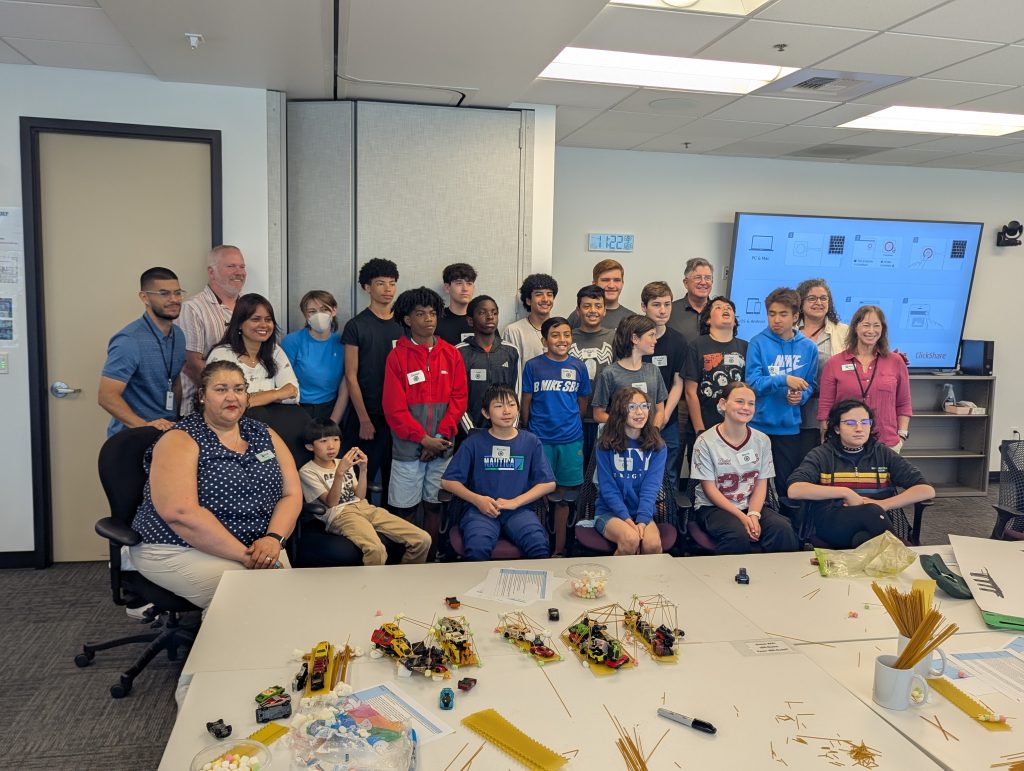
Our latest STEAM Connect Pop Up was an extraordinary, extended four hour deep dive into one of the Pacific Northwest’s most critical infrastructure initiatives: the Interstate Bridge Replacement (IBR) program. Held on Tuesday, June 16, 2026 this special event brought together over 20 participants, including students, parents, and teachers, for a collaborative look at civil engineering, environmental logistics, and public transit planning.
We were thrilled to partner with iUrbanTeen for this event, and we look forward to collaborating with them on future pop ups to expand our community outreach.
The Complex History and Science of the Bridge
The IBR team pulled back the curtain on the massive regional coordination required between transportation entities, including the Washington Department of Transportation (WSDOT), the Oregon Department of Transportation (ODOT), TriMet, Coast Guard, U.S. Army Corps of Engineers, and others.
A panel of experts from the project team shared their insights, including Barbi Alexander-Brown (WSDOT Economic Opportunities and Compliance Specialist, who shared her unique career pivot from medical school), Nathan Potter (Project Manager and Engineer), Meghan Hodges (WSDOT Community and Government Relations Manager), Fabian Hidalgo Guerrero (Community Engagement Manager), Brenda Siragusa, and others.
Students discovered the intense engineering realities behind the existing crossing and the future replacement spans:
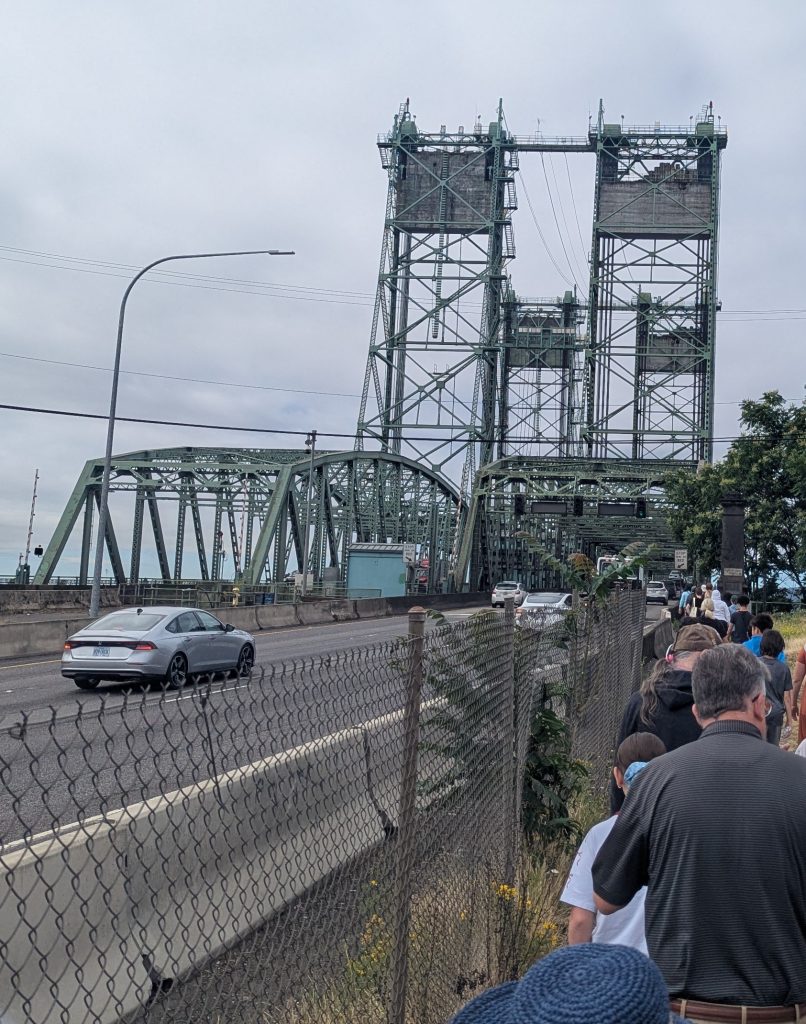
- A Century of Transit: The existing crossing consists of two twin lift bridges. The Southbound span was built in 1917, while the Northbound span was completed in 1958. It remains the only traffic light on the Interstate 5 corridor between Mexico and Canada. (more info)
- The Cost of Doing Nothing: Keeping the existing structure operational is a monumental task. The bridge is staffed 24/7, undergoes a complete structural inspection every two years, and costs approximately $1.8 million annually just to operate and maintain.
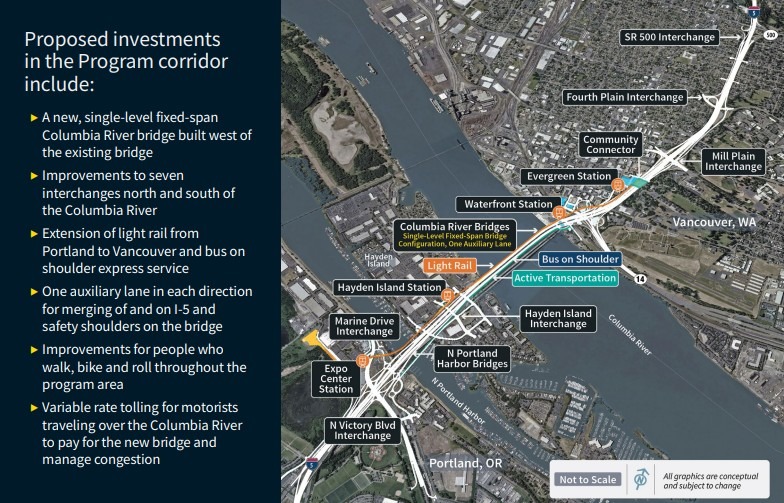
- The Opportunity: Replacing the bridge eliminates all traffic delays caused by bridge lifts. It improves traffic flow by adding lanes in both directions. It also adds modes of transportion between Portland and Vancouver with proposed two-direction light rail line and bike lanes. Pedestrian crossing paths will be greatly improved for safety, and dedicated bus lanes are being proposed as well.
- “Pretzels in Chocolate Pudding”: Engineers Eric Forsyth (TriMet Project Manager), Nathan Potter (ODOT Civil Engineer, who holds a nuclear engineering degree from OSU), and Casey (WSDOT Civil Engineer and a 14 year veteran of the prior Columbia River Crossing project) used this unforgettable phrase to describe the current bridge’s timber pilings sitting in the silty, liquefiable soil at the bottom of the Columbia River. They are buried only about 60ft currently. To ensure modern seismic stability, the new bridge’s 6 foot diameter pillars must drive down 200 feet deep.
- Three Channels for River Traffic: The team explained that there are three distinct water channels under the bridge for marine traffic. The deepest channel sits directly under the lift spans for the tallest commercial boats, which can request a bridge lift at almost any time, with minor limitations during peak rush hour. The middle channel, known as the “hump,” accommodates tall ships with shallower drafts, such as sailboats. Finally, the south most channel is designated for smaller recreational vessels.
- The Traffic Tightrope: The bridge currently accommodates 143,000 vehicles per day. The design team must solve major spatial constraints, particularly on the Vancouver side where the freeway must lift over a Burlington Northern Santa Fe (BNSF) rail main line without disrupting active operations. The new alignment must also manage complex connections to WA-14 and several ramps leading into downtown Vancouver.
- Multi Modal Transit Expansion: The project includes the highly anticipated and intricate plan to extend TriMet light rail across the river. The proposed route would continue from the current terminus at the Expo Center, cross the Columbia River to add a vital stop on Hayden Island, continue to the Vancouver riverfront, and eventually follow a future routing to a yet to be determined terminus in Vancouver.
- Construction Logistics: Building the future infrastructure while keeping the region moving is a major puzzle. The plan involves building the first new span on the west side of the current southbound lane, which will eventually become the future southbound I 5 lanes. Once that span is ready, SB traffic will temporarily shift over so the old northbound bridge can be deconstructed and the new northbound span can rise in its place. While traffic capabilities will be preserved, there will be a challenging construction window where north and south traffic will be highly limited, resulting in likely significant traffic backups in both directions for a period of time.
Hands On Engineering: The Ultimate Truss Challenge
After returning to the project office, our students transitioned from observers to practitioners. The participants split into four competitive design teams, each mentored directly by an IBR engineer or architect.
Every student was handed a professional role sheet detailing a specific workplace title and set of responsibilities to portray during the simulation: Project Manager: Overseeing timelines and team coordination: Architect: Shaping the visual and aesthetic design of the span; Lead Construction: Managing the structural assembly; etc.
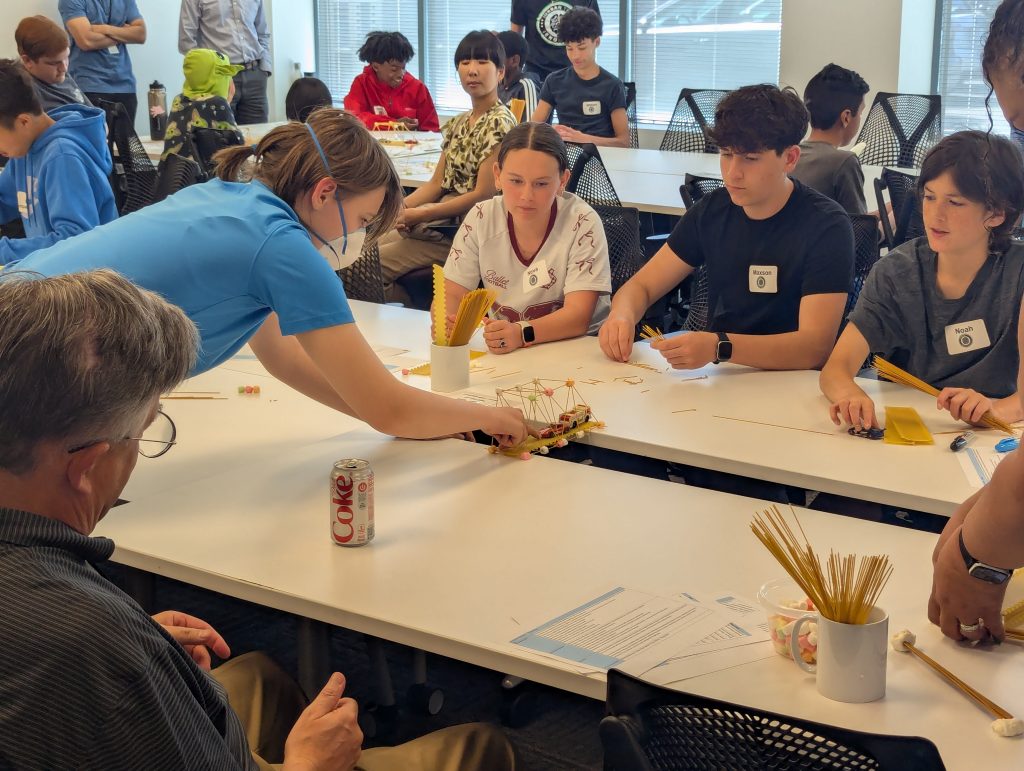
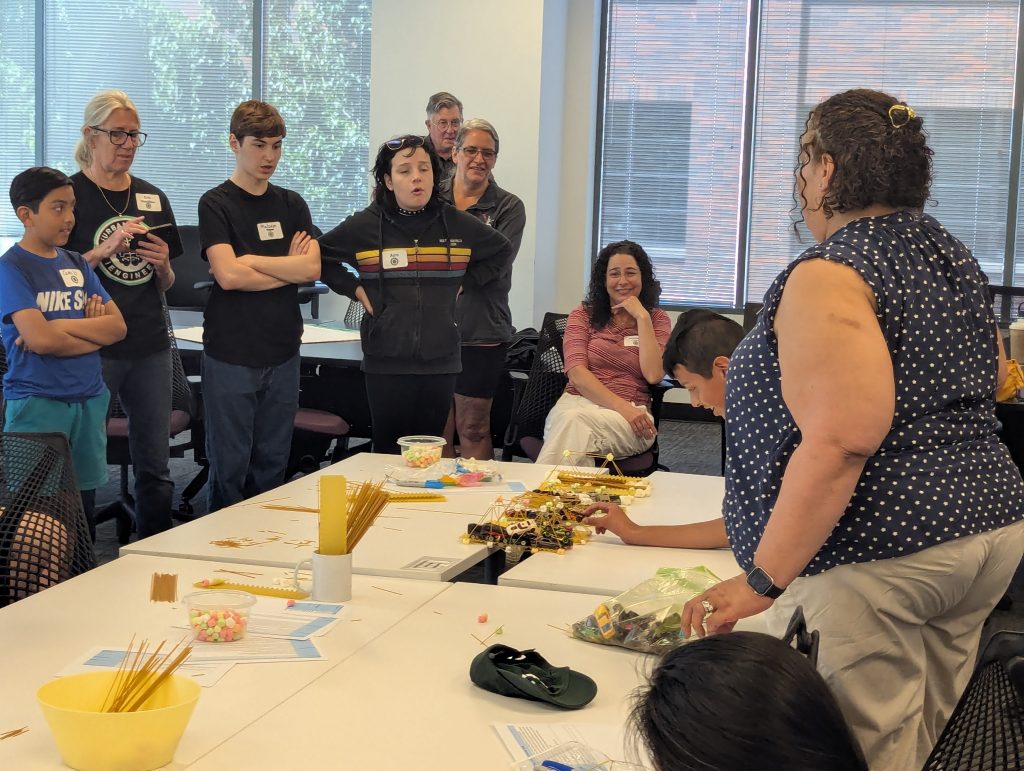
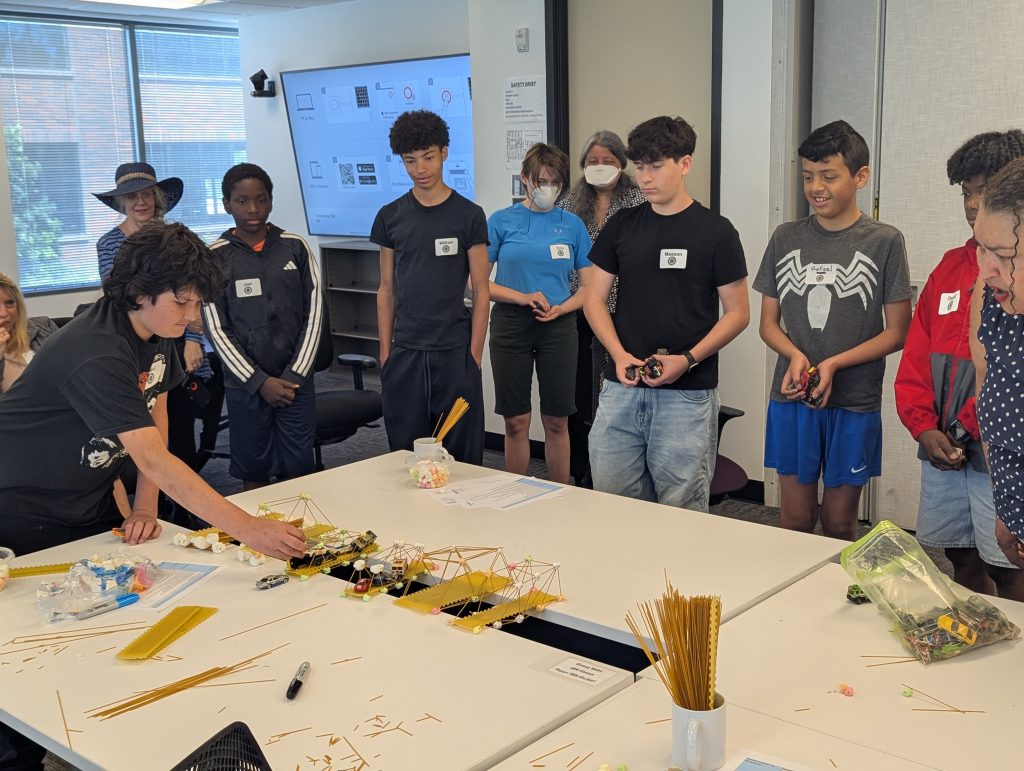
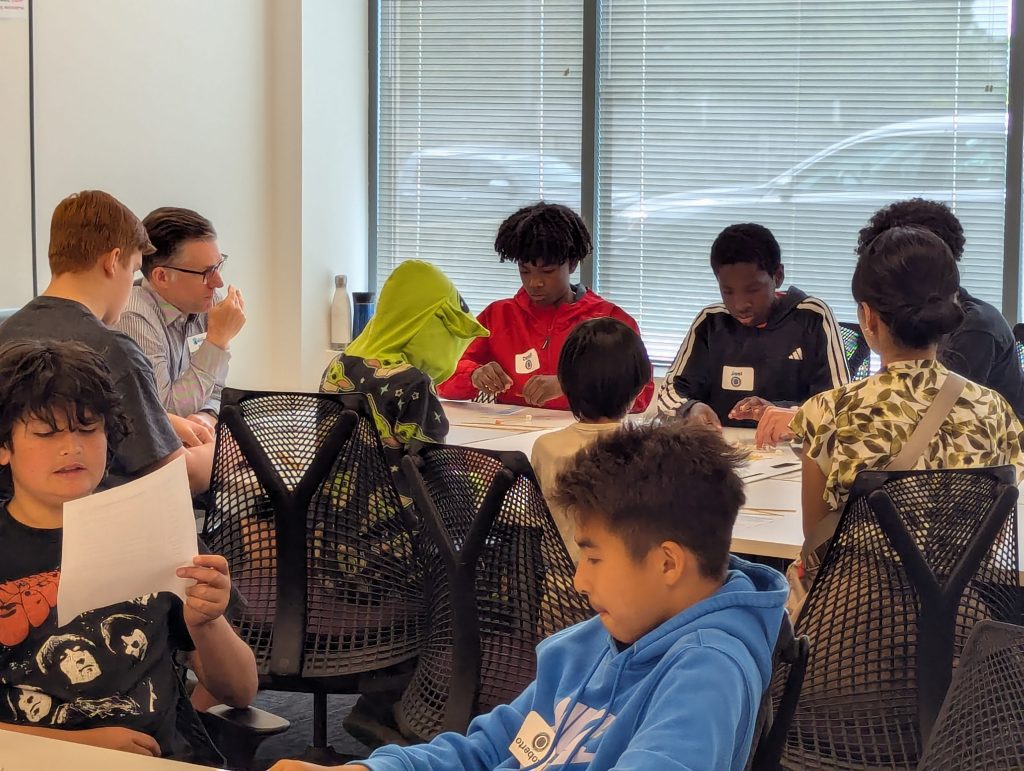
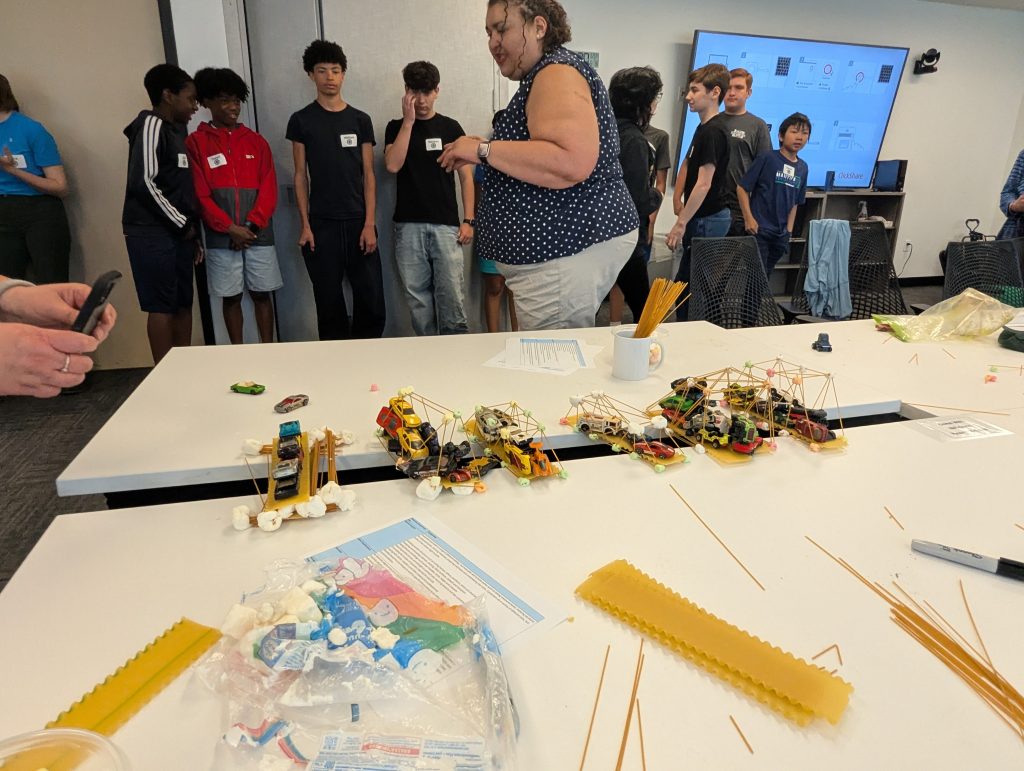
Tasked with bridging an open gap between two separated tables, the teams brainstormed structural concepts on paper before building physical models out of marshmallows and hard spaghetti and lasgne noodles. Teams tested various truss and suspension configurations for sturdiness, while exhibiting their roles. When time expired the project managers were asked to demonstrat the bridges by placing Matchbox cars across the spans to see how much weight they could hold before failing- NONE FELL!!
The afternoon closed with excellent one on one communication between parents, students, and active project staff. Contact information was exchanged, paving the way for future mentorship opportunities and continued exploration into civil service, structural and traffic engineering, and infrastructure logistics.
A massive thank you to the entire IBR team and our partners at iUrbanTeen for dedicating four hours to inspiring our Next Gen Pros!
Looking Ahead
Our pop up series connects young learners with the local workplaces transforming our region. These monthly visits are entirely free of charge, with participants providing their own transportation to the host sites.
Check the Official STEAM Connect Schedule to view upcoming dates and secure a spot for your student!